FG Ends 14-Year Gap with First Nationwide Harmonised Fertiliser Guide
Dayo Thomas
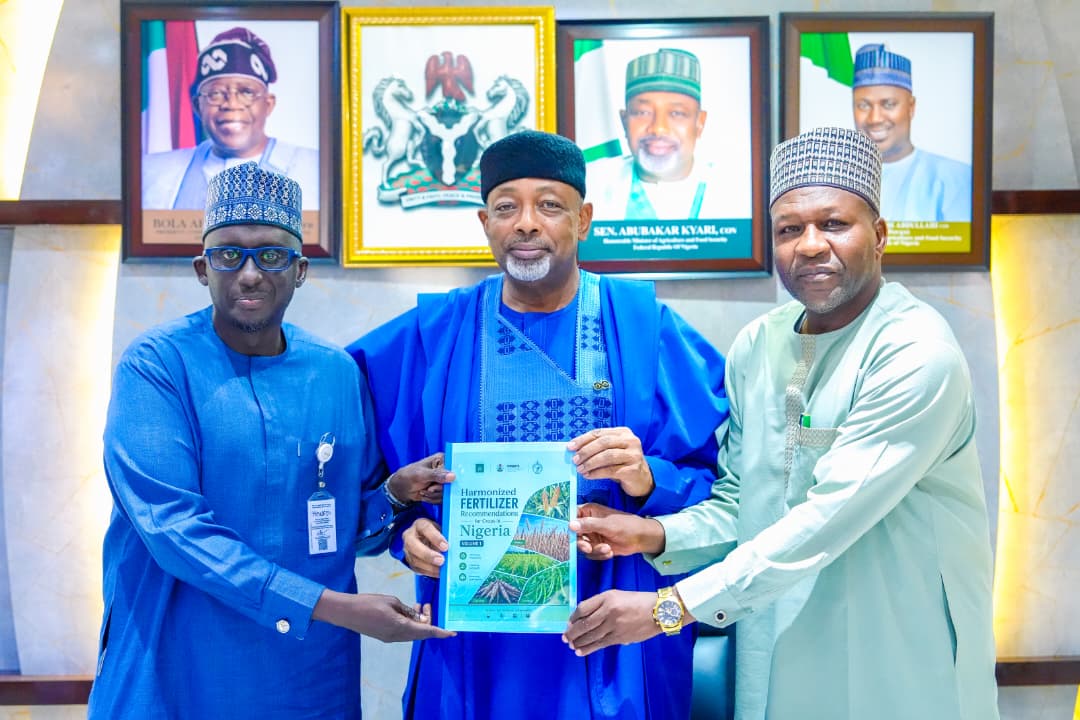
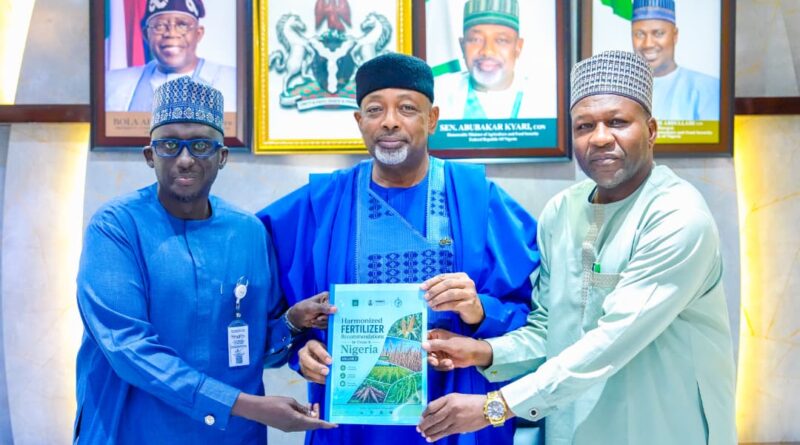
The National Agricultural Development Fund, NADF, has released Nigeria’s first harmonised fertiliser guide in 14 years, giving every farmer, extension agent, and agro-dealer one authoritative reference across all 36 states and the FCT. For more than a decade, conflicting rates from different projects and states forced farmers to guess at application. The result was predictable inefficiency: under-application that capped yields, and over-application that drained profit without extra harvest. The new guide fixes that by tying fertiliser rates directly to soil type, rainfall pattern, and crop growth stage. It provides precise quantities and timing for nitrogen, phosphorus, potassium, and micronutrients for staples like maize, rice, cassava, sorghum, and vegetables. NADF says the shift is a deliberate move away from generic “two bags per acre” thinking toward precision agronomy, so farmers get more kilograms of grain, tuber, or fruit from each bag of fertiliser.
A guide only creates value if farmers can trust what is inside the bag. FG paired the launch with stronger enforcement to rebuild confidence in the input market. NADF and the Federal Ministry of Agriculture have trained 109 fertiliser inspectors nationwide and upgraded the National Fertiliser Management Platform to improve traceability from factory to farmgate. A newly operational National Reference Laboratory now conducts rapid nutrient tests, making it harder for adulterated products to reach farmers. The timing is strategic. Government has already distributed 12,000 litres of organic fertiliser and trained more than 3,500 farmers on sustainable soil management this season. With inspectors, labs, and a harmonised standard in place, recommendations on paper can now translate into results in the field.
The guide lands as Nigeria tries to convert production growth into income growth. Agriculture recorded 3.15% growth to N11.87 trillion in Q1’26, but agric exports fell 31.2% year-on-year to N1.17 trillion. That gap means Nigeria must extract more value from every hectare at home. For Okun farmers in Ijumu, Yagba East and West, Mopa-Muro, and Kabba-Bunu, the harmonised guide gives extension workers a credible tool to prescribe exact NPK and urea splits for maize on ferruginous soils or cassava on sandy loam, instead of blanket rates that ignore local conditions. With insecurity and multiple road levies still eroding farmgate profit, that precision protects margins. If adoption scales through the National Agricultural Growth Scheme – Agro-Pocket, which already supports over 622,000 farmers with subsidised inputs, the guide could help smallholders shift from higher cost to higher income in 2026