
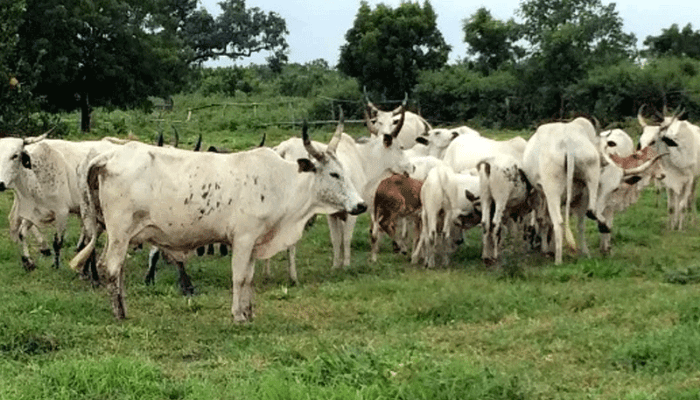
FG Targets End to Open Grazing, Earmarks 470 Gazetted Reserves for Pastoral Resettlement
Favour Ojo
The Federal Government has unveiled a decisive shift away from open grazing, with the Ministry of Livestock Development confirming that 470 gazetted and legally protected grazing reserves have been identified for rehabilitation and pastoral resettlement. The move is designed to phase out the roaming of cattle across major cities including Abuja and Lagos, while laying the foundation for a modernized livestock economy.
Speaking on Arise News during a briefing on the National Dairy Policy Framework, Minister of Livestock Development Idi Maiha described open grazing as “no longer sustainable.” He linked the practice directly to Nigeria’s chronically low dairy output and recurring farmer-herder tensions, noting that long-distance cattle movement undermines productivity and weakens the country’s ability to meet domestic milk demand.
Central to the new strategy is the transition of pastoralists from nomadic movement to a sedentary ranching model. According to Maiha, settling herders within designated reserves will unlock coordinated interventions in disease surveillance, breed improvement, and animal health management. The ministry believes that clustering livestock operations will make veterinary services, genetic upgrades, and feed systems more efficient and measurable.
To enforce compliance and reduce cattle theft, the government is introducing a jaw-tagging system for livestock. Under the plan, any animal that strays beyond its assigned reserve boundary will trigger an automated alert, allowing for immediate recovery. The technology is expected to serve as both a security measure and a tool for monitoring herd movement across the 470 reserves.
The minister painted a stark picture of Nigeria’s dairy performance. Average milk yield per cow currently stands between 1.2 and 2 litres per day, a fraction of the 30 litres recorded in countries such as Kenya. Maiha attributed the gap to decades of genetic stagnation, poor feeding regimes, and inadequate disease control. Despite an estimated 270 million ruminants cattle, sheep, goats, and camels Nigeria has failed to systematically upgrade its livestock genetics, leaving the sector unable to compete regionally.
Rehabilitation of the reserves will go beyond demarcating land. The Federal Government intends to transform them into “Renewed Hope Livestock Villages,” equipped with earth dams for water security, veterinary clinics, schools, health centres, dairy and beef processing hubs, and solar power through the Rural Electrification Agency. Four sites Wawazangi in Gombe, Wasem in Plateau, Gongoshin in Adamawa, and Ka’u in the FCT have been named as pilot locations for the rollout.
The Ministry of Livestock Development has clarified that there is no nationwide ban on open grazing at this time. I but the ministry described the policy as a “gradual, well-structured transition” toward modern ranching rather than an abrupt prohibition. Officials emphasized that the success of the plan hinges on making the reserves fully functional and economically viable for pastoralists before restricting movement.
The 470-reserve figure represents the most recent audit by the Livestock Ministry, updating earlier counts of 417 reserves slated for rehabilitation and 273 reserves covering 4.5 million hectares nationwide. While some reserves have been degraded by invasive weeds or encroachment, government assessments indicate that roughly 400 remain viable with minimal upgrades.
For AgricNews Digest readers, the implications are clear: the era of cattle roaming urban highways is being legislated out of existence, but the timeline depends on how quickly infrastructure, technology, and herder buy-in align inside the reserves. The next milestone will be the commissioning of the first Renewed Hope Livestock Villages and the deployment of the jaw-tagging system across pilot herds.