
FG Sets Up Technical Working Group to End Rejection of Nigeria’s Farm Exports
Dayo Thomas
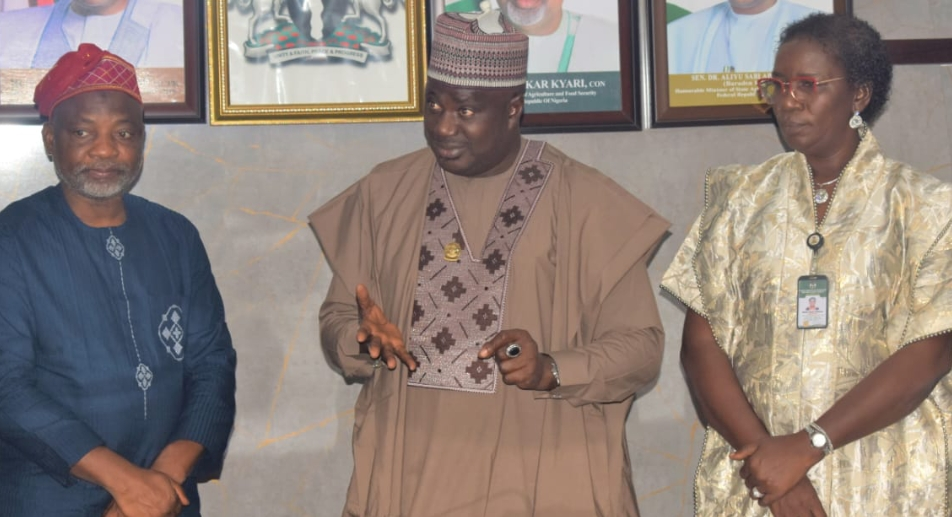
The Federal Government has moved to stem the costly wave of export rejections stalking Nigerian agriculture with the inauguration of a Technical Working Group on Agricultural Produce Residue Standards. Unveiled at the Ministry of Agriculture and Food Security in Abuja, the group is tasked with dismantling the sanitary and phytosanitary barriers that have repeatedly locked Nigerian crops out of regional and global markets.
Minister of State for Agriculture and Food Security, Sen. Aliyu Abdullahi, said the initiative is central to President Bola Tinubu’s Renewed Hope Agenda, which insists that Nigerian agricultural products must do more than meet production targets they must also comply with internationally accepted food safety and quality standards. For years, consignments of cocoa, sesame, ginger, and other commodities have been turned back at foreign ports for breaching Maximum Residue Limits. Those rejections have translated into billions of naira in losses, eroded market confidence, and left farmers and exporters carrying the financial scars.
The newly formed TWG has a tight two-month mandate. It will review existing residue policies, harmonize national guidelines with international benchmarks, identify regulatory and operational gaps, and recommend interventions to strengthen Nigeria’s laboratory capacity for monitoring and enforcement. Permanent Secretary Temitope Fashedemi, represented by Director of Agribusiness Ogunbiyi, described the exercise as “the beginning of a critical journey” toward a robust residue management framework that can protect both consumers and the country’s trade reputation.
Committee Chairman Lateef Oladimeji said the goal is unambiguous: ensure Nigerian produce “meets acceptable residue standards in line with global best practices.” The ministry confirmed that survey instruments will be developed to assess the current state of pesticide residues in priority crops, while agencies responsible for standards, testing, and compliance will be mapped for better coordination. Director of Plant Health and Pest Control, Grace Iwendi, commended the minister for driving the reform, noting that food safety is now inseparable from food security.
If the group delivers, the impact will be felt from Kano’s sesame fields to the cocoa belts of Ondo. For exporters battered by rejected shipments and for smallholders whose prices dip when containers return home, the TWG represents a policy shift from reaction to prevention and a chance to finally keep Nigeria’s harvest on the world’s shelves.