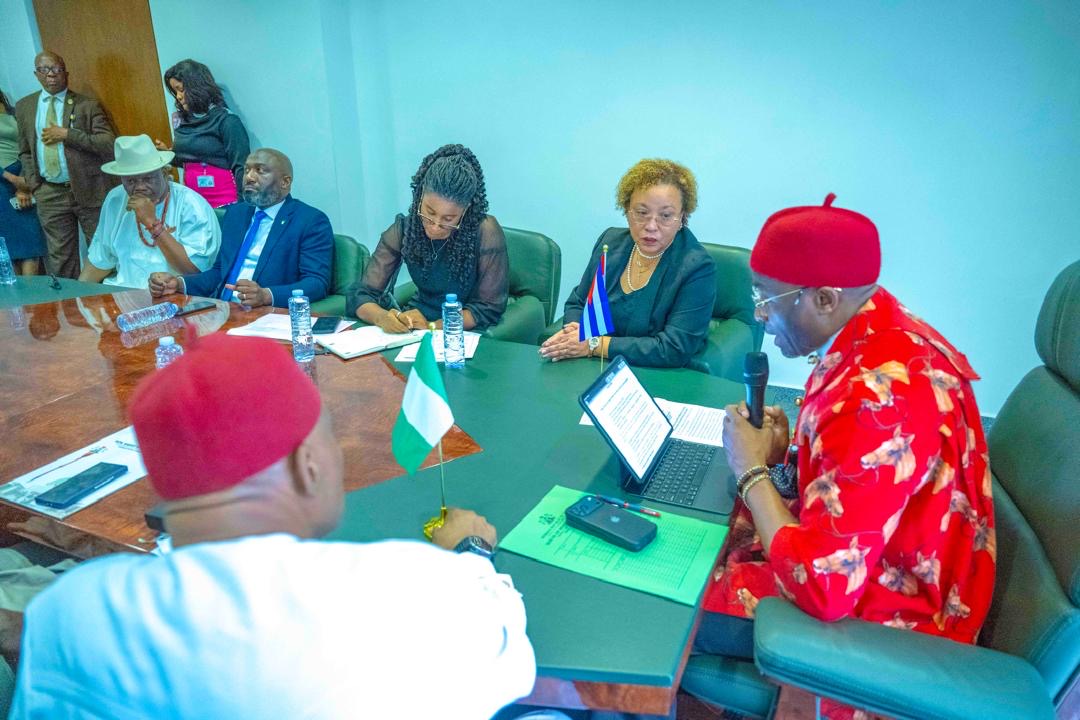

Kalu Reaffirms Nigeria-Cuba Diplomatic Ties, Pushes for Deeper Agriculture Cooperation
For AgricNews Digest
Deputy Speaker of the House of RepresentativesBenjamin Kalu, has restated Nigeria’s commitment to strengthening bilateral relations with Cuba, with agriculture placed at the center of new cooperation plans alongside healthcare, trade, tourism, and biotechnology.
Speaking in Abuja while hosting a Cuban parliamentary delegation led by Fernando González Llort of Cuba’s National Assembly of People’s Power, Kalu said diplomatic engagement must deliver practical outcomes for farmers and agribusinesses. Representing Speaker Abbas Tajudeen, he insisted that parliamentary frameworks should lead to signed Memoranda of Understanding, ratified treaties, and funded programmes that directly impact food production and rural livelihoods.
The Deputy Speaker noted that the Nigeria–Cuba Parliamentary Friendship Group will serve as a vehicle to fast-track joint agricultural research, technology transfer, and targeted investments. He added that the 10th Assembly is ready to use legislation and oversight to remove barriers that limit agro-trade and knowledge exchange between both countries.
Kalu identified agriculture and biotechnology as strategic areas where Cuba’s experience can complement Nigeria’s scale. He pointed to Cuba’s advances in organic farming, urban agriculture, and bio-inputs that have sustained food production under resource constraints. Nigeria, with vast arable land and a large youth population, seeks partnerships in seed technology, soil health, biological pest control, and vaccine production for livestock. The goal is to build local value chains that reduce import dependence, create jobs, and strengthen food security.
Despite strong cultural ties, bilateral trade remains low. UN Comtrade data shows Nigeria’s imports from Cuba stood at only $2,380 in 2024. Kalu called this gap an opportunity for agri-entrepreneurs. He urged frameworks that open markets for Nigerian cocoa, cashew, sesame, ginger, and processed foods, while enabling Cuban agricultural expertise and equipment to support Nigerian smallholders. Turning shared heritage into economic value, he said, will benefit farmers, processors, and rural cooperatives.
Nigeria and Cuba marked 50 years of diplomatic relations in 2024, a partnership rooted in shared struggles against colonialism and racism.
According to Kalu, lawmakers will push for laws that ensure technology transfer, protect intellectual property, and develop local agricultural value chains. The vision is a people-to-people compact linking Nigerian states and Cuban provinces through farmer exchanges, research institutes, and private-sector partnerships. With Cuba’s technical knowledge and Nigeria’s land and market size, both nations aim to build resilient, productive, and job-rich agricultural systems for the Global South.