
Human Waste Touted as Alternative to Synthetic Fertilizer
Dayo Thomas
French environmental engineer Fabien Esculier argued that recycling human excrement could replace a significant share of synthetic fertilizers and eliminate roughly 2% of global greenhouse gas emissions. Presenting his research on nutrient circularity, Esculier pointed out a fundamental inefficiency in current food and sanitation systems: nitrogen and phosphorus consumed in food are flushed into wastewater treatment plants, where they are largely destroyed, while farmers simultaneously depend on fossil-fuel-intensive processes to manufacture those same nutrients.
Modern fertilizer production relies heavily on natural gas to fix atmospheric nitrogen through the Haber-Bosch process. That means countries import gas from Russia and Qatar not just for energy, but to grow food. At the same time, treatment plants use energy to strip nitrogen from sewage before discharging water, wasting a resource that agriculture desperately needs. Esculier’s work shows that safely treated human-derived fertilizers could close this loop, turning waste into a domestic, renewable input for farms and reducing reliance on imported gas and mined phosphorus.
By displacing synthetic fertilizer, widespread adoption of human waste recycling would cut emissions from both fertilizer manufacturing and wastewater treatment. The combined climate benefit, Esculier estimates, could reach 2% of total global greenhouse gas emissions — equivalent to taking hundreds of millions of cars off the road. For regions facing fertilizer shortages due to geopolitical shocks and shipping disruptions, such as the current tensions in the Strait of Hormuz, locally produced recycled nutrients could also buffer food systems against price spikes and supply chain breakdowns.
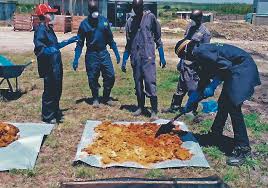
Despite the scientific case, Esculier acknowledged that social and cultural barriers remain the biggest hurdle. The “yuck factor” around using human-derived products on food crops means policy, safety certification, and farmer education would be critical before scaling up. Pilot projects in Europe and parts of Africa are already testing treated urine and fecal compost on cereals and tree crops, with strict pathogen controls and regulatory oversight to ensure food safety.
The proposal reframes sanitation not as waste disposal, but as nutrient recovery — a shift that could link urban consumers directly back to the farms that feed them.