
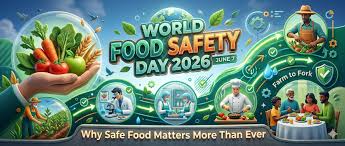
World Food Safety Day 2026: Safer Food, Stronger Farms, Healthier Nigeria
By Dayo Thomas | AgricNews Digest
World Food Safety Day lands on June 7 every year, and the 2026 theme is clear: “Food safety: science in action.” The message is simple. Food safety is not a slogan. It is a chain of daily choices made from farm to fork. It starts with the seed a farmer selects, runs through how water is used for irrigation, how pesticides are applied, how harvests are handled, and ends with how food is cooked and stored in the home. One weak link can break the whole chain. One right practice can protect an entire community.
For Nigerian farmers and agribusinesses, this year’s day is a reminder that food safety is directly tied to food security and income. When tomatoes are harvested and transported without proper crates, they bruise and rot before reaching market. When grains are stored with too much moisture, aflatoxin sets in. When meat is processed in unhygienic conditions, diseases spread. The losses are not just health losses. They are money losses. A safe harvest is a sellable harvest. A contaminated harvest is a rejected harvest, and rejection kills profit faster than drought.
The 2026 call to action from FAO and WHO is “science in action.” That means using practical, field-tested knowledge. Test your soil and water. Follow correct pre-harvest intervals for pesticides so residues break down before harvest. Use clean crates, nets, and cold storage where possible. Train handlers on personal hygiene. At home, wash hands, wash produce, cook to safe temperatures, and store perishables properly. These steps do not require big budgets. They require awareness and discipline. Small farmers who adopt them consistently see fewer losses and stronger buyer trust.
Nigeria’s food systems are under pressure from population growth, climate change, and market demands. As we push for more production under “Reclaiming the Green. Powering the Harvest. Feeding the Nation,” we must also push for safer production. Youths trained through KEDA, ITF, and NYSC farm programs are entering agriculture with energy and skills. The next step is embedding food safety into that training so every new agripreneur builds a reputation for quality, not just quantity. Buyers pay more for food they can trust.
This World Food Safety Day, the question for all of us is the same: what one practice can we improve today? Maybe it’s using potable water for washing vegetables. Maybe it’s drying grains properly before bagging. Maybe it’s enforcing hygiene in a processing center. Science has shown the way. Action is what makes food safe. And safe food builds stronger farms, healthier families, and a nation that feeds itself with confidence.