
Benue Court Convicts Five Herdsmen for Open Grazing Violations
Dayo Thomas
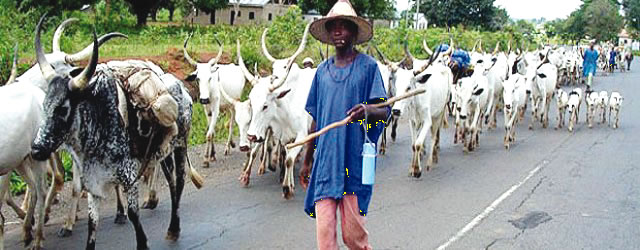
A Makurdi Magistrates’ Court has convicted five herdsmen on charges of criminal conspiracy and open grazing, reinforcing Benue State’s enforcement of its Open Grazing Prohibition and Ranches Establishment Law. The convictions come as the state continues to grapple with tensions between crop farmers and pastoralists over land use and crop destruction.
The Magistrate, Mr Emmanuel Azembe, found Yusufu Buhari, 22; Hamidu Mama, 11; Saleh Muhammadu, 22; Ali Ibrahim, 12; and Idi Bature, 11, guilty after they confessed to the offence. Before conviction, the court explained the charges under Section 97 of the Penal Code and Section 19(2) of the Open Grazing Prohibition and Ranches Establishment Law 2017 to each defendant.
Police Prosecutor, Sgt. Ato Godwin, told the court that the men were arrested on March 7 by a Joint Task Force led by ASC Terna Raphael of the Nigeria Security and Civil Defence Corps. The arrest followed a call from the district head of Kwenev, Guma Local Government Area, reporting that herdsmen were openly grazing cattle on cassava farms.
Counsel to the convicts, Mr Tijani Ahmed, pleaded for leniency, citing their ages and arguing they did not understand the implication of their action. The magistrate sentenced each to three months in prison for criminal conspiracy, with an option of ₦3,000 fine. For violating the anti-open grazing law, they received 24 months in federal medium prison or a ₦30,000 fine each. The sentences are to run concurrently.
Benue’s anti-grazing law defines open grazing as “the act of pasturing livestock to feed on dry grass, growing grass, shrubs, herbage, farm crops, etc, in open fields without any form of restriction”. Governor Samuel Ortom signed the bill into law on May 22, 2017, with implementation starting November 1 that year. Its stated objectives include preventing destruction of crop farms, settlements and property, reducing clashes between nomadic herders and crop farmers, and protecting the environment from degradation caused by over-grazing.
Five years after passage, the law still generates controversy. While the Director of Livestock in the state’s Ministry of Agriculture, Dr Edward Amali, says it has been “very effective” and that 90% of the state no longer witnesses clashes, critics note enforcement gaps. Reports persist of livestock guards taking laws into their hands, seizing or selling animals without court orders, and of pigs and goats still roaming in some areas, including Makurdi township.
The law was designed to curb cattle roaming across farmlands and protect sedentary farming communities, but implementation has been uneven. Analysts argue the design overlooked key issues: it expected herders, many nomadic and low-capital, to invest in ranches with minimal support, while livestock guards lacked resources and federal-state coordination broke down.
The conflict extends beyond legality into identity and livelihood. Farmers, mostly Christian crop growers, view the grazing law as protection for ancestral land. Herders, often Fulani and Muslim, perceive it as a threat to a way of life rooted in transhumant grazing routes that predate Nigeria’s borders.
Environmental and economic arguments also shape the debate. Nigeria has an estimated 58 million cattle, and open grazing is increasingly seen as economically inefficient and ecologically damaging. Unchecked movement leads to overgrazing, depletes vegetation cover, increases desertification risk, and spreads animal diseases like foot-and-mouth disease and tuberculosis. Ranching and feedlot systems are promoted as alternatives offering better livestock productivity, health monitoring, and job creation in fodder production and veterinary services.
Meanwhile, other states are exploring different models. Borno State plans to create ranches and grazing fields on 5,000 hectares for herders willing to establish businesses, with Governor Babagana Zulum advocating livestock breeding centres across the North-East.
The Benue convictions underscore a national tension: balancing security for farmers, livelihoods for pastoralists, and sustainable land use in a country where land is both economic asset and identity.