FG Trains 100 Dairy Farmers in Oyo, Pushes Ahead with Livestock Sector Reform
By Agricnews Digest
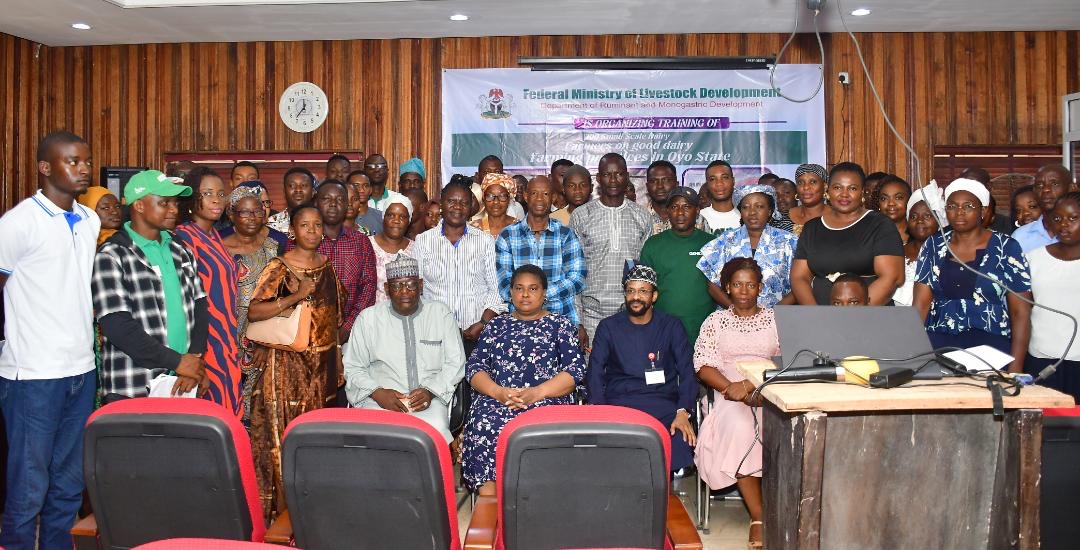
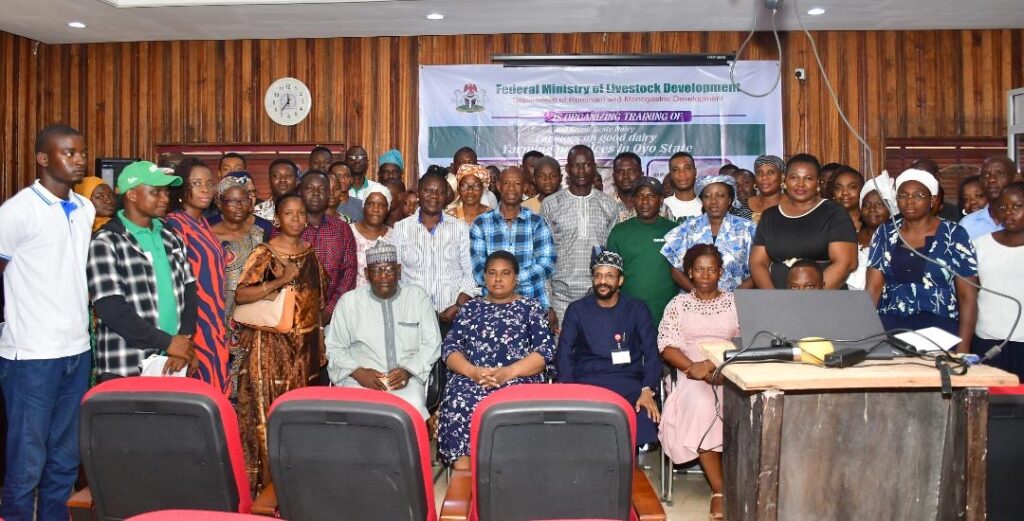
The Federal Government has trained 100 small-scale dairy farmers in Ibadan, Oyo State, as part of a renewed push to reform Nigeria’s livestock sector and cut dependence on imported milk.
The three-day capacity-building programme, held from May 4 to 6 and organised by the Federal Ministry of Livestock Development, focused on modern dairy farming techniques, improved animal husbandry, sustainable milk production, handling, and processing.
Speaking at the event, the Senior Special Assistant to the President on Livestock Development, Idris Ajimobi, said the training underscores the government’s resolve to reposition the livestock sector through grassroots empowerment. He noted that achieving self-sufficiency in dairy production depends on equipping local farmers with practical skills to raise productivity and quality across the value chain.
“This training is essential to improving productivity, ensuring quality, and building a sustainable dairy value chain that benefits rural communities and the nation at large,” Ajimobi said.
The Oyo State Coordinator of the Federal Ministry of Livestock Development, Florence Kalulu, described smallholder dairy farmers as critical players in Nigeria’s food system. She highlighted challenges limiting the sector, including low productivity, poor animal health management, inadequate hygiene practices, and limited access to modern dairy technologies.
The training aligns with the National Livestock Growth Acceleration Strategy, which prioritises value chain development, feed and fodder improvement, and grassroots capacity building. Participants are expected to step down the knowledge to other farmers in their communities to expand impact.
Alongside the training, the ministry has commenced a nationwide baseline survey covering 67 indicators across cattle, poultry, sheep, goats, piggery, feed systems, and veterinary services. The data will feed into a Monitoring and Evaluation Framework to guide policy, investment, and accountability in the sector.
The initiative comes as Nigeria continues to spend about $1.5 billion annually on dairy imports despite having nearly 58 million cattle. Officials say expanding local production through farmer training and structural reforms is key to unlocking the sector’s estimated $32 billion untapped potential.
For dairy farmers and agri-stakeholders, the programme signals a shift toward practical, field-level support as the foundation of livestock sector reform.