
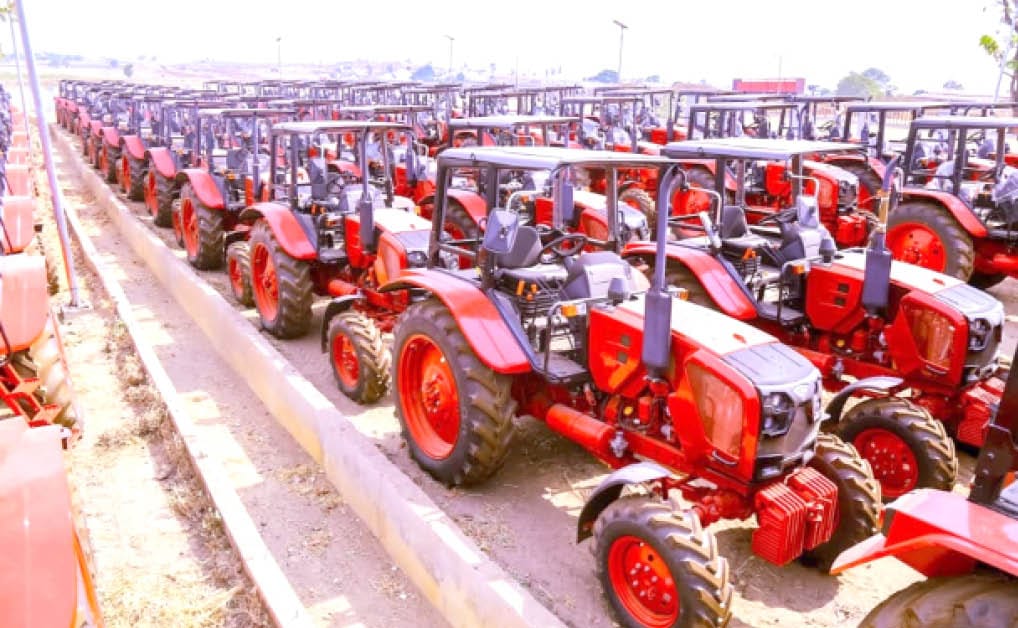
2,000 Tractors for 1.2 Million Farmers: FG’s Mechanization for Nigeria’s Empty Fields
AgricNews Digest
The Federal Government just made a bold move. FG is targeting 1.2 million farmers with 2,000 tractors in a fresh push to mechanize agriculture and push production up. On paper, it looks like exactly what we’ve been talking about — getting farmers back to work and taking hoes out of the equation.
The goal is not to give every farmer a tractor. That would cost trillions. Instead, FG wants a “hire-service” model through cooperatives and mechanization service centers. One tractor serves clusters of farmers in a community. A smallholder with 2 acres pays a subsidized fee, the tractor shows up, plows the land in hours instead of the 3 weeks it takes with manual labor. Timeliness is everything in farming. Plant late because you waited for manual clearing, and you lose the whole season to rain patterns and pests.
This is FG’s answer to two problems we’ve discussed: low productivity and high food prices. Nigeria still imports wheat, milk powder, and rice we should grow. Mechanization is meant to close that gap. More acres plowed = more food grown = less pressure on forex = hopefully a bag of rice that doesn’t climb past ₦50,000.
If the tractors actually reach them, this could be a pull factor. A farmer in an IDP camp might think twice before returning home if he knows he won’t have to clear 5 acres with a cutlass. Machines reduce the labor burden and make farming dignified again. For the farmer who became a recharge-card seller in Lokoja, mechanization could be the reason he picks up his hoe again.
It also aligns with agric diplomacy. Countries like Brazil and India transformed their food systems through mechanization partnerships. Nigeria is basically saying: “We want to do the same. We want to stop being a nation that farms with its back and start farming with engines.”
But machines alone don’t solve what insecurity broke. Three realities will decide if this works:
Security must come first
What’s the point of 2,000 tractors if the farmers of Ayegunle-Igun, parts of Benue, Zamfara, and Kaduna still can’t access their land? A tractor cannot plow a field controlled by bandits. Mechanization without safety is like building a highway through a war zone. “It does not cost you anything to try” has to apply to security deployment first, then tractors.
Nigeria has over 35 million smallholder farmers. 1.2 million is about 3%. Past tractor programs failed because the machines ended up with political cooperatives or big farms, not the woman with 2 acres in a remote village. If these 2,000 tractors don’t reach the grassroots, they become expensive decorations.
.Without local workshops, trained operators, and fuel subsidies, those 2,000 machines will be scrap metal in 3 years. Farmers will drop back to hoes and the cycle continues. A tractor is not a one-time gift. It’s a 10-year relationship.
Tractors are progress, but they can also distract us into thinking technology alone will fix food insecurity. Farmers also need safe roads to market, storage to avoid post-harvest loss, and fair prices so they don’t plant at a loss. A tractor plows the land. It does not remove fear from the farmer’s heart.
If FG gets this right — security + fair access + maintenance — then 2,000 tractors could help bring Nigeria’s farmers back to where they belong: in the fields, growing food. That’s how you start filling the empty tables we talked about. If it’s just another press release, then the farmers will remain in IDP camps and cities, and the tractors will rust while food prices keep climbing.
The intention is right. The execution will tell us if Nigeria’s harvest is about to change.